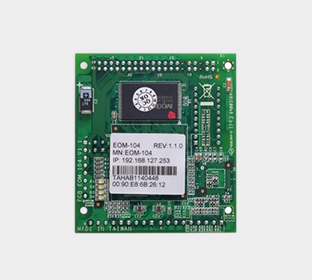
Industrial Network Infrastructure
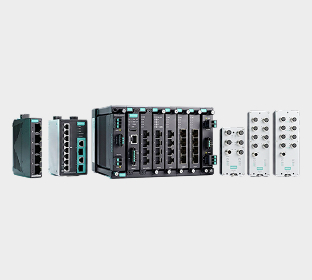
Ethernet switches used around serial device networks connect servers, converters, PLCs, and field devices into a dependable local infrastructure. They support compact machine networks, redundancy, embedded switching, rackmount layouts, and rugged communication where serial and Ethernet systems meet. They keep the transition from legacy devices to IP networks tidy.
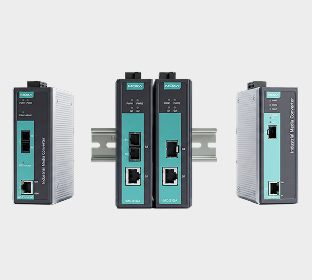
Ethernet media converters solve distance, noise, and isolation problems in industrial networks by converting copper links to fiber. They extend communication across plants, substations, transport systems, and outdoor infrastructure while reducing electromagnetic interference and ground potential issues. They are a small component that can prevent large communication headaches.
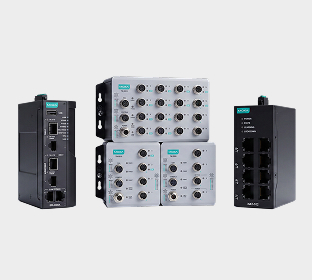
Secure routers and industrial firewalls separate, protect, and remotely access OT networks without exposing critical assets. They support routing, NAT, VPN, firewall policies, segmentation, and controlled connectivity for factories, utilities, transportation systems, and remote automation sites. They help make connectivity deliberate instead of accidental.
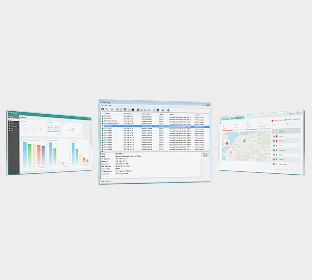
As industrial networks grow, faults become harder to locate and downtime becomes more expensive. Network management software gives teams topology visibility, device monitoring, configuration support, alerts, and maintenance tools so Ethernet, wireless, and security infrastructure can be managed with less guesswork. It turns network maintenance from reactive searching into planned action.
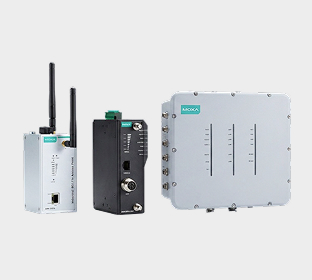
Wireless LAN products connect mobile equipment, remote devices, vehicles, and hard-to-wire plant areas without sacrificing industrial reliability. Access points, clients, bridges, rail wireless devices, and controllers support roaming, secure configuration, rugged operation, and stable communication for demanding field use. They help remove cabling constraints while keeping control over the network.
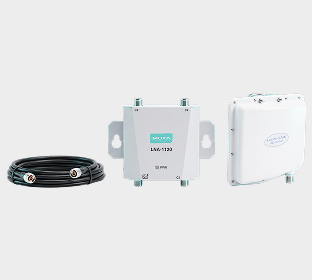
Wireless accessories improve the reliability of Wi-Fi, cellular, GNSS, and antenna-based communication systems. Antennas, cables, surge protection, boosters, and low-noise amplifiers extend coverage, protect equipment, and maintain signal quality in cabinets, vehicles, outdoor sites, and remote installations. They often decide whether a wireless link is merely present or truly dependable.