
- A developer built a solution that can be integrated onto newly manufactured industrial vehicles or retrofitted onto existing ones — haulers
- stockchasers
- tow tractors
- other utility vehicles — turning them into autonomous fleets without the high cost and complex installation that normally block autonomous-vehicle adoption
Case Studies
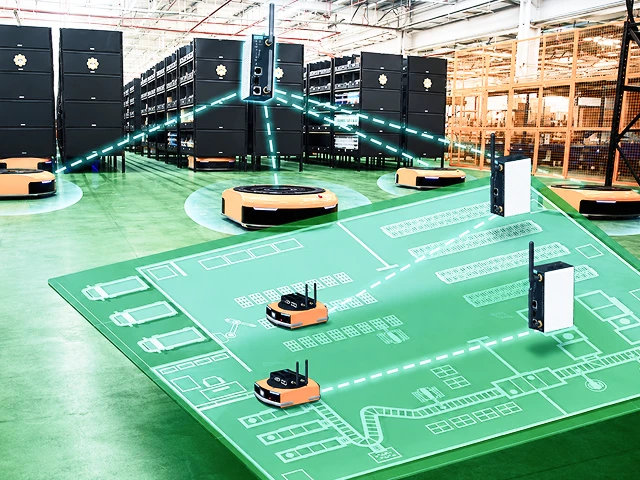
Next Generation AMR/AGV
26 Jun 2026A AMR/AGV solution developed using GPU computers


 Overview
 Challenges
The main challenges were
- Autonomous vehicles push computing to the edge, and that means constant shock and vibration exposure, often combined with variable temperature, poor ventilation, and high humidity in industrial settings — conditions that demand genuinely rugged, robust hardware for reliable day-to-day operation
- The autonomous-vehicle technology itself can detect more than 1,000 objects per second, which requires a high-performance edge AI computer with real GPU support to process images and sensor data from the moving vehicle's surroundings in real time
- And because voltage spikes during a vehicle's start-up and shutdown can damage an in-vehicle computer, the platform also needed a properly designed ignition-control function to delay power transitions and avoid those spikes
 Objectives
The system needed to
- Provide a rugged edge AI computer that survives constant shock and vibration without dislodging add-on GPU cards; deliver enough GPU performance to process real-time object detection at high volume; protect against ignition-related voltage spikes; and offer the flexible
- expandable I/O needed to support a range of different vehicle types and future feature additions
 Solution Delivered
The solution included
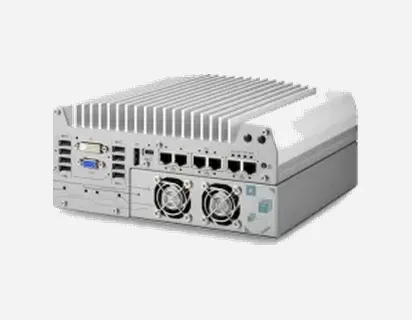
- The developer's turnkey self-driving solution — unifying robotaxi-level autonomous driving software, sensing units, analytics, a human-machine interface, and a lighting system — now runs on a Neousys rugged edge AI GPU computer at its core
- The latest NVIDIA RTX professional-series graphics card is secured with a Neousys-patented bracket specifically to withstand vibration, paired with a thermal design rated for -25°C to 60°C operation — solving the exact problem (cards shaking loose) that pushed the developer away from its other vendors
- Built-in ignition control and an 8V to 48V wide-range DC input protect the computer from voltage spikes during vehicle start-up and shutdown, and rich, flexible I/O — 2x PCIe x16 Gen3 8-lane slots, 2x PCIe x8 Gen3 4-lane slots, 2x M.2 B-key, and 2x full-size mini-PCIe sockets — gives the platform room for customization, wireless communication, and future expansion across different vehicle types
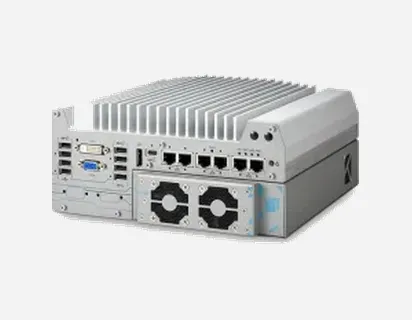
Products referenced in the source material include
Conclusion
A compelling story, framed around - prior failures (other brands' cards shaking loose) and a specific fix (a patented mounting bracket), which is a much more concrete reliability claim than "rugged design" on its own.