
- Autonomous-driving systems are only as good as the real-world data used to train and test them, and validating a deep-learning model means putting it in an actual moving vehicle, not just a simulator
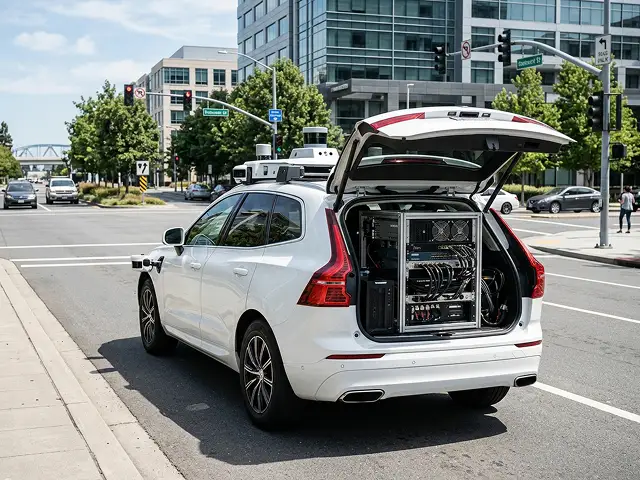
- This project covers a camera-equipped test vehicle used to capture road-scene imagery and run that data back through the model under development, checking both how accurate its predictions were and how fast it could produce them
Case Studies
Road AI Model Validation Platform
26 Jun 2026In-vehicle edge computing for collecting road images and evaluating autonomous-driving deep-learning models.


 Overview
 Challenges
The main challenges were
- Road data collection needs a computing platform that can keep up with a moving vehicle in real time
- correctly timestamp and store high volumes of image data from multiple cameras
- still leave enough processing headroom to run inference on the model being tested — all inside a vehicle cabin or trunk space
- subject to the vibration
- power fluctuations of daily test driving
 Objectives
The system needed to
- Collect road-scene image datasets suitable for training and validating autonomous-driving models
- run inference on the model in the vehicle during actual test drives
- measure both accuracy and processing time under real driving conditions rather than only in a lab
 Solution Delivered
The solution included
- A rugged in-vehicle computing platform was installed to handle image capture, storage, and on-vehicle model inference simultaneously
- Built on rugged embedded computer families designed for vehicle deployment — Nuvo VTC-series systems paired with GPU-accelerated edge AI modules — the platform ingested synchronized video from multiple cameras over GMSL and PoE camera links, ran the deep-learning model directly against that live feed, and logged both the model's predictions and the ground-truth footage for later comparison
- Because inference ran on the vehicle itself rather than being uploaded and processed afterward, the test team could see accuracy and processing-time results from each drive almost immediately, instead of waiting on an offline batch review
Conclusion
Validating an autonomous-driving model on real roads, not just in simulation, is what actually proves it's ready — and that's only possible with an in-vehicle computer rugged and fast enough to run the model live while the car is moving.