
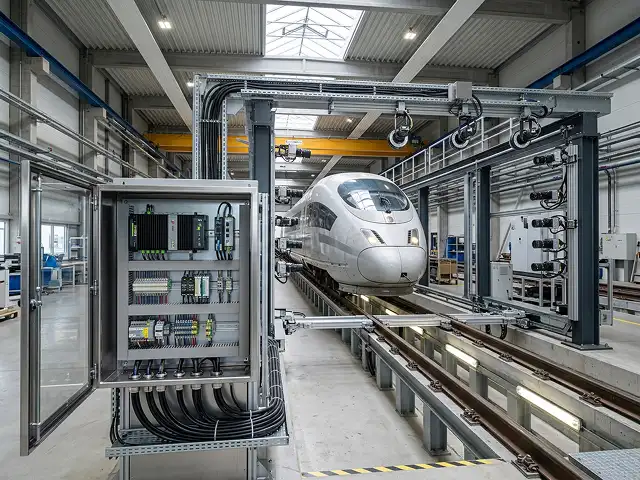
- As a train passes through a fixed inspection point
- an array of trackside cameras captures every wagon in detail while a GPU-based edge controller processes the footage in real time — automatically checking each section of the train for missing nuts
- cracked wheels
- other visible faults that would otherwise require a manual walk-around inspection
Case Studies
Rail Vehicle Machine Vision Inspection
26 Jun 2026GPU machine-vision controller for railway vehicle inspection using camera-based inspection and edge processing.


 Overview
 Challenges
The main challenges were
- Manual visual inspection of rolling stock is slow, inconsistent between inspectors, and hard to scale as train frequency increases — a missed crack or a loosened fastener can turn into a derailment risk if it isn't caught early
- Any automated alternative needs to capture and analyze high volumes of image data in real time, at trackside, without missing a single wagon
 Objectives
The system needed to
- Automate rail vehicle inspection end-to-end — from image capture to defect detection — so every passing train is checked consistently
- faults are flagged immediately
- maintenance teams get reliable
- repeatable data instead of relying on manual visual checks
 Solution Delivered
The solution included
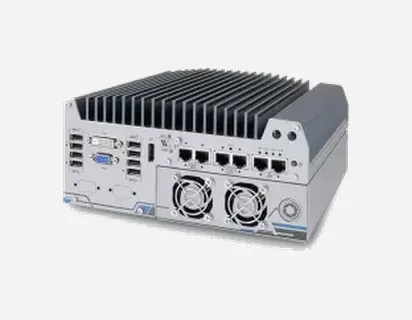
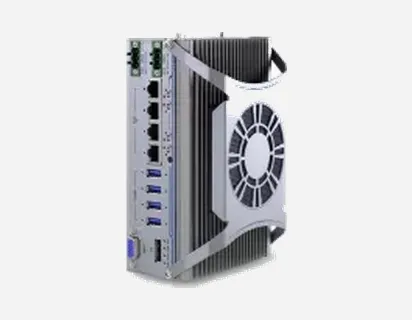
- A GPU-enabled machine vision controller sits at the core of the inspection system, processing live video from trackside cameras positioned to capture every wagon as the train passes
- As each section of the train moves through the camera's field of view, the controller's onboard GPU runs real-time image analysis — comparing what it sees against expected patterns to flag anomalies such as missing or loosened nuts and bolts, cracked or worn wheels, and other visible structural defects, all without slowing or stopping the train
- Because the processing happens directly at the edge rather than being streamed elsewhere for analysis, the system can keep pace with a moving train and deliver results the moment inspection is complete, rather than after a delay
- Flagged wagons and defect locations are logged automatically, giving maintenance teams a clear, evidence-backed record of exactly what was found and where — turning what used to be a slow, manual walk-around into a fast, consistent, and repeatable automated check on every single train that passes
Products referenced in the source material include
Conclusion
Rail networks run on trust that every wagon is safe to move — automating that check with GPU-powered vision at the trackside turns inspection from a periodic manual task into a continuous safety net, catching problems before they become incidents.