
- Generator sets provide primary or backup power wherever grid access is unavailable, insufficient, or unreliable, and a fleet of them scattered across multiple sites is only as useful as the visibility an operator has into their status
- This project covers a remote monitoring deployment giving dashboard-level visibility into power generation, state of charge, fuel level, equipment uptime, system faults, historical trends, and alarms across a generator fleet
Case Studies
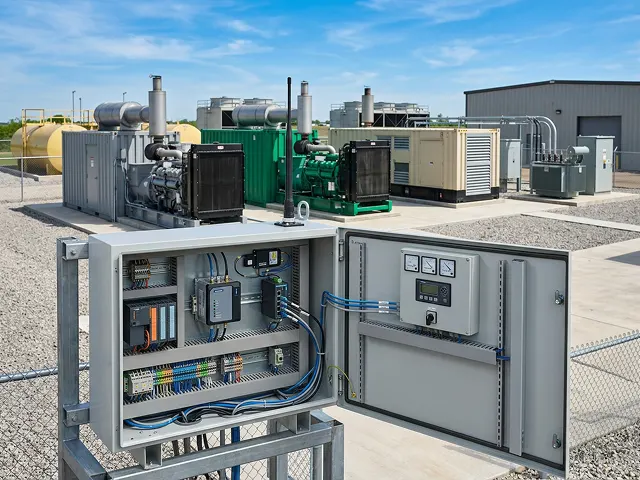
Generator Fleet Command Center
26 Jun 2026Rugged IoT gateways for remote monitoring, VPN access, alarms, reports, and predictive maintenance of generator sets.


 Overview
 Challenges
The main challenges were
- Generator sets are typically deployed in industrial or remote locations where physical access is limited, so monitoring staff need real-time alerts the moment a status deviation occurs rather than finding out during the next scheduled visit
- The field hardware handling that monitoring has to communicate with each generator's PLC, HMI, or controller and stay reachable through a secure web portal, while tolerating heat, wide-range power input, shock, and vibration in whatever environment the generator itself is sitting in
 Objectives
The system needed to
- Provide 24/7 remote monitoring and control of generator sets
- enable secured VPN access into each site's HMI/PLC/controller systems
- support configurable alarms and an online dashboard
- record historical data to support predictive maintenance
- allow the field hardware to be deployed largely plug-and-play
 Solution Delivered
The solution included
- A rugged industrial IoT gateway was installed at each generator site and integrated with the generator monitoring platform, connecting locally to the site's PLC, HMI, or controller and communicating back to a central web portal over a secured VPN tunnel
- This gave the monitoring team a live, encrypted line into every generator's status without needing a dedicated network engineer at each remote site to set it up
- The gateway continuously logged operating data — fuel level, state of charge, uptime, and fault events — which fed both the real-time alarm system (flagging anything outside preset or customized limits the moment it happened) and a historical dataset used for trend analysis and predictive maintenance planning, so maintenance teams could act on a developing pattern before a generator actually failed
Products referenced in the source material include
Conclusion
Generator reliability is a power-continuity issue, not just a maintenance one — this deployment turned a fleet of standalone generator assets into a monitored, alarmed, remotely accessible network, which is what makes backup power something you can actually count on rather than just hope is working.