
- Offshore wind farms operate in difficult environments where storms, waves, salt erosion and vessel traffic can affect safety and long-term reliability. Manual inspection of turbines and offshore assets can be risky, costly and time-consuming.
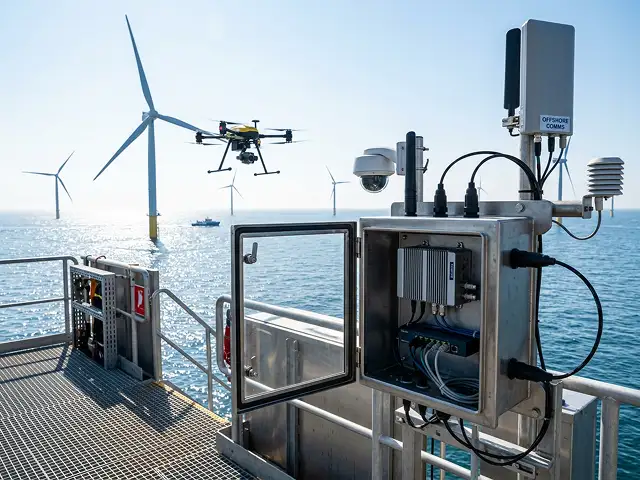
- In this application, UAVs and AI vision were used to support offshore wind farm inspection and monitoring. UAVs helped inspect engineering facilities and detect defects, while rugged edge AI systems supported real-time monitoring of vessel activity around offshore wind farm areas.
Case Studies
Eyes on Offshore Wind
26 Jun 2026A rugged edge AI and UAV inspection application for offshore wind farms, supporting turbine inspection, defect detection and vessel-area monitoring in harsh marine environments.


 Overview
 Challenges
The main challenges were
- • Offshore wind farms face salt erosion, storms, waves and harsh weather
- • Manual inspection can expose workers to risk
- • Wind turbine and platform inspections require high accuracy
- • Vessel traffic around offshore wind farms must be monitored for safety
- • Edge systems must operate outdoors with moisture, corrosion and temperature exposure
- • Real-time AI vision requires GPU-accelerated computing close to the camera
 Objectives
The system needed to
- • Use UAVs to improve safety during wind turbine and facility inspection
- • Support defect detection using high-resolution cameras and AI analysis
- • Monitor vessel activity near offshore wind farm zones
- • Enable real-time AI processing at the edge
- • Reduce inspection risk and improve inspection efficiency
- • Use rugged hardware suitable for offshore and outdoor environments
 Solution Delivered
The solution included
- The solution used two hardware approaches.
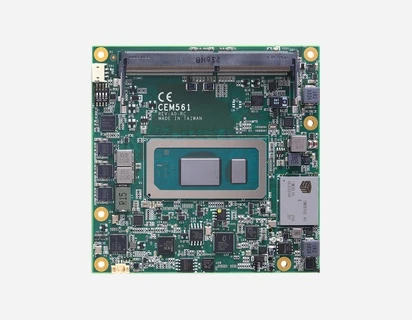
- For UAV inspection, a compact System-on-Module and baseboard architecture supported camera and sensor integration inside industrial drones. This helped enable AI-based defect detection while keeping the system compact and upgradeable.
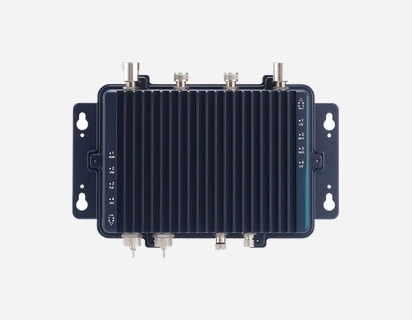
- For offshore monitoring, a rugged IP67-rated edge AI system supported camera connectivity and real-time AI vision near the wind farm. The sealed chassis, M12 I/O, waterproof antenna openings, PoE camera connection and wireless/GPS support made it suitable for harsh outdoor and marine environments.
Products referenced in the source material include
Conclusion
This application is useful for the Power vertical because it shows how offshore renewable infrastructure can benefit from UAV inspection and rugged edge AI. It connects worker safety, defect detection, vessel monitoring and harsh-environment computing into one strong renewable-energy application story.