
- Internal logistics can consume at least 70% of the total time from raw material to finished product, because products spend so much of their journey being transported between stations or sitting in temporary storage rather than actually being worked on
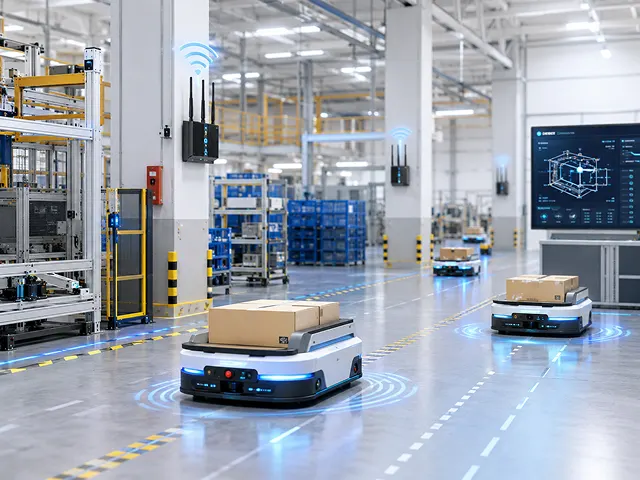
- This manufacturer introduced an AGV (Automated Guided Vehicle) system integrated with its MES and WMS to get real visibility into logistics and production flow instead of treating internal movement as a black box
Case Studies
AGV Logistics Without Factory Idle Time
26 Jun 2026Wireless AGV networking for internal logistics visibility, MES/WMS integration, and reduced material-handling idle time.


 Overview
 Challenges
The main challenges were
- Manual internal logistics were time-consuming and labor-intensive
- the AGVs needed reliable wireless communication across complex factory paths — including intersections and T-junctions — where path planning and scheduling decisions genuinely matter for avoiding collisions and bottlenecks
 Objectives
The system needed to
- Replace manual material movement with automated AGV transport
- enable remote vehicle monitoring and scheduling
- integrate AGV movement data with MES and WMS systems
- improve traceability
- reduce the labor and floor space tied up in temporary storage
 Solution Delivered
The solution included
- An ultra-reliable AGV wireless network was deployed to support vehicle movement, remote monitoring, and scheduling across the factory floor
- Path maps were maintained on the cloud, which gave the logistics team scheduling flexibility they didn't have with fixed, hard-coded AGV routes, while integration with MES, WMS, and the facility's elevator systems (for multi-floor movement) tied AGV activity directly into the same traceability record as the rest of production — so a part's location history includes its AGV transport, not just its time on a machine
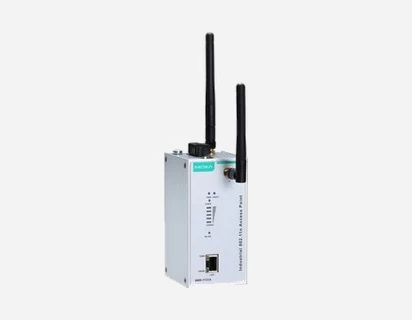
Products referenced in the source material include

Conclusion
This is a useful Manufacturing story because internal logistics is often hidden waste. It turns AGV networking into a business-impact story: improved traceability, lower labor requirement, better working efficiency, and reduced temporary storage space.