
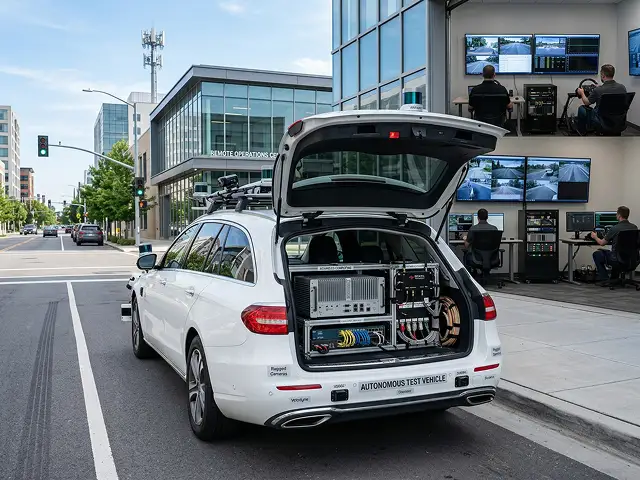
- Full vehicle autonomy isn't mature enough yet for every driving scenario, so a practical bridge is remote teleoperation: a trained driver in a control room who can take over a vehicle's steering, braking, and gear decisions the moment the situation calls for it
- This case covers a 5G-based remote-takeover system connecting a vehicle to a control room in near real time
Case Studies
5G Remote Vehicle Takeover
26 Jun 2026Fanless embedded computers for low-latency 5G teleoperation between a vehicle and a remote-control room.


 Overview
 Challenges
The main challenges were
- Remote teleoperation only works if the driver in the control room sees exactly what's happening at the vehicle with almost no delay
- every control input they send back has to arrive and execute just as fast — over a live 5G link
- while the vehicle itself is moving and exposed to shock
- vibration
- heat that a control-room computer never has to handle
 Objectives
The system needed to
- Enable a remote-control room to view live vehicle video
- send steering
- gear-shift commands back to the vehicle
- keep end-to-end latency low enough over 5G that remote control feels responsive rather than delayed
 Solution Delivered
The solution included
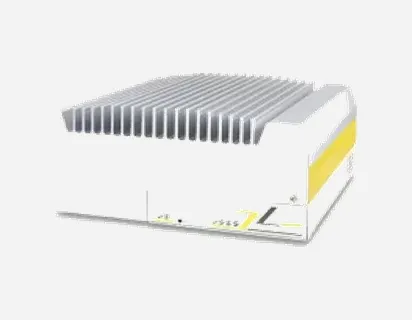
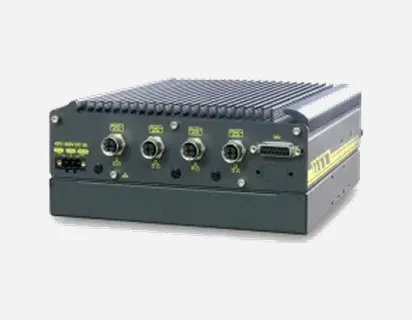
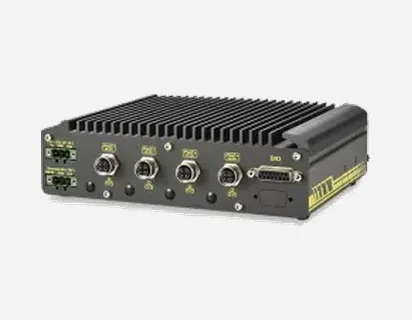
- Two fanless embedded computers were deployed as matched endpoints — one built into the vehicle, one in the control room — communicating over a 5G link using RabbitMQ to carry control commands and WebRTC to stream real-time video
- The in-vehicle unit connected to the 5G module, the vehicle's data bus, and an HD camera, packaging live video and vehicle telemetry for transmission; the control-room unit received that stream and relayed commands entered through a wheel-and-pedal control setup back to the vehicle
- In testing at 30 to 40 km/h, the round trip from control-room input to vehicle response averaged around 270 milliseconds — fast enough for a remote driver to react to road conditions in something close to real time
Products referenced in the source material include
Conclusion
Remote takeover is a practical stepping stone toward full autonomy, and this system shows what it actually takes to make that work: matched rugged computing at both ends of the link, and a network fast enough that "remote" doesn't mean "delayed."